RSS Feeds Explained: How they can be a journalistic gold mine.
RSS feeds are an ancient relic of the internet gone by. But, like any good community, can we learn to utilise the knowledge of our forebears?

RSS feeds are quite the relic in this day and age. Being nearly as old as I am, RSS feeds were created in March of 1999. They were made for a similar relic, netscape.com, now AOL.
RSS, or "Really Simple Syndication" feeds were basically ubiquitous for much of the early internet's history; however, they have had a steep decline in the public zeitgeist.

Which is a massive shame, because they are as useful now as they ever have been! More so, even! RSS feeds, with a reader, like Feedly for instance, can be massively helpful in journalistic practice, as a conscientious consumer, and as an intelligent disseminator.
A note before is that without readers they aren't user-friendly and in fact, aren't usable at all. I would explain the process, but most readers are fairly good at explaining in layman's terms how to integrate the feed into the reader. So, if one of the below hyperlinks links you to an intimidating looking wall of code, don't be alarmed! You can plug that links into a reader and automatically have access to those feeds, for free.
So, without any further ado, here is how you can learn from the past to boost your future!
Follow RSS feeds to find stories relevant to your publication
RSS Feeds are a niche interest area; therefore, if you have a niche area you want to explore, like data journalism, for instance, they can be very useful! Though they are very old fashioned, most publications still have them somewhere, and you can tell by the logo featured above.
They are useful as information collection tools, collating all your sources, and automatically updating, AND delivering straight to your phone if your reader has mobile app support. Plenty of different sources, not just other publications, have RSS feeds, so check out if any of your sources use them. For my money as a data journalist, Nieman Lab and Digiday have RSS feeds, so they're an excellent way to stay informed, but also, the Parliament UK runs a feed for first-hand information
Data Journalism specifically
Interestingly to Data Journalists looking for a quick and efficient way of collecting and staying up to date on datasets, plenty of Open Data Sources, such as the ONS and National Archive use feeds. This is a great way to get up to date data sets, and though they're pretty niche, and the number of Open Data Sources that have feeds linked to them isn't particularly high, when you do see it, be sure to subscribe!
Podcasts; the secret RSS feeds!

Podcast apps like Google Podcasts or Podcast Addict actually utilise RSS feeds for basically all of their content. Distribution platforms send out RSS signals that are picked up by these apps. They are then distributed en masse to these apps in RSS form, as an xml file. So, if you've ever used a podcasting app, chances are, you have been using podcasts without ever realising it!
Podcasts are massively useful, as former interhacktives Luke Barratt and Bridie Pearson-Jones would know. For more information, stay tuned for a brief overview article on the topic. Or, check out the old Data Day podcast from days of yore.
Using RSS to stay informed
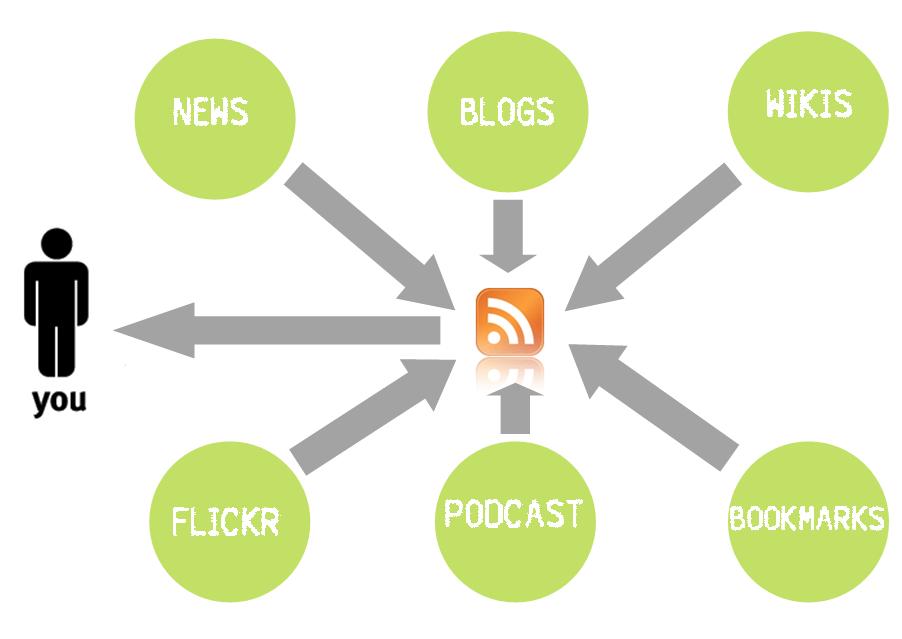
People are becoming more and more conscious of how precisely we receive our news. Be it news aggregation apps, newsletters, or social media, each has its strengths or weaknesses. RSS feeds add a compelling element to the discussion! They add something that is becoming more attractive in an increasingly full world. Customisation.
I have Feedly on my phone's home screen, so I get niche news directly to my home screen. Even better, I can customise which publications I want to receive, similar to Twitter, without the murky algorithmic sorting. I receive everything that publications sends, which can be an overload, but different sections often have different feeds.
Community building with RSS
RSS feeds are an incredibly niche subsection of internet culture. That makes them perfect for a very loyal consumer base. If your publication is focused around tech/web news, your users will generally be more informed on using RSS. If they aren't in that small group, having something that's seen as a bit niche, a bit exclusive, drives engagement. Not to mention that it is a means of gaining coveted "direct traffic". If a portion of your user base subscribes to your RSS feeds, you aren't reliant upon social or search.
I hope I have managed to convince you of the efficacy of a tool that can be incredibly powerful. If there is anything I haven't covered drop a comment and I'll do my utmost to help your query.
In the meantime though, maybe read one of our other fascinating articles. Maybe on something a bit more current, like bolstering your data journalism knowledge through instagram? Or the efficacy of tweetdeck (also a lifesaver) as a student journalist?


